Blog
Game Design
Constance Does Everything Right. But is that enough?
Monthly series from RealXP Lab Game Design Club
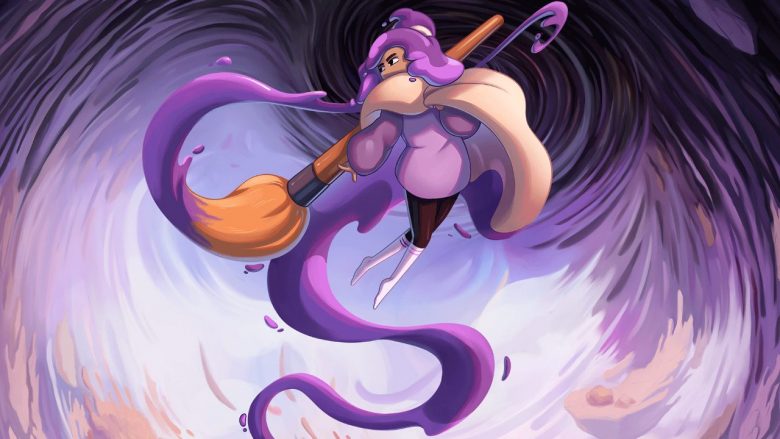
Our group's consensus on Constance came down to a single word: correct. It's a competent, good-looking Metroidvania that does the genre justice without redefining it. But that word kept coming back in conversation, and what made the discussion interesting wasn't what Constance gets wrong. It was the handful of moments where it almost breaks through into something more, and the design decisions that hold it back.
The Game
Constance is a hand-drawn 2D Metroidvania by Blue Backpack where you play as an artist navigating a colorful inner world shaped by her declining mental health. You explore interconnected biomes, fight bosses, and unlock movement abilities like dashes and a double jump. The twist is a paint-based resource system: every special ability drains a paint bar, and emptying it puts you in a corrupted state where abilities cost health instead. Between boss fights, the game drops you into short narrative sequences in a different genre entirely, from point-and-click scenes to a Guitar Hero-style rhythm game. It launched November 2025 to "Very Positive" reviews on Steam (900+), runs about 6-10 hours depending on playstyle, and has sold an estimated 62,000 copies.
A Camera That Remembers What You Can't
What Constance does: Early in the game, you unlock a camera that lets you take in-game screenshots and pin them to specific locations on the map. See a ledge you can't reach yet or an item behind a locked barrier? Snap a photo, and that Polaroid stays attached to that room on your map as a reminder to come back later.
Why it's interesting: The idea isn't entirely new (Prince of Persia: The Lost Crown has a similar screenshot marker), but Constance's implementation is clean and intuitive. The group liked imagining it in other contexts, like a 3D game where you could place a virtual camera and orbit it later to re-examine a space. That said, not everyone even used it. A veteran of the genre in our group said they just remembered where things were and found it redundant, especially since the game later gives you a map completion tracker that serves a similar purpose.
Our take: We started thinking of this as visual bookmarking, and it feels like a pattern that could improve any game where players revisit spaces. When your player returns to a location, what information do they actually need to make a decision? If the answer is "what they saw last time," a screenshot-based system might do more than any waypoint marker ever could.
When Cutscenes Could Be Games
What Constance does: After certain boss fights, the game shifts genres entirely. One sequence is a point-and-click scene where you interact with objects from the protagonist's real life. Another is a rhythm game. These interludes explore the character's creative struggles and represent moments of grounding outside the imagined world.
Why it's interesting: Our group liked the concept of these sequences. But there was unanimous frustration that none of them have a fail condition. You can't lose. In the point-and-click sections, the game waits for you to click the right thing. In the rhythm game, a bad performance just changes a line of dialogue. The group felt this undercuts the emotional point: these scenes are supposed to convey the pressure of creative burnout, but the gameplay tells you there are no stakes. As one of us put it: "The art is showing the overwhelm, but the mechanics are saying nothing bad can happen."
Our take: What if these were actual mini-games with the possibility of failure? A timed puzzle that gets harder under pressure. A rhythm sequence where poor performance tangibly changes the outcome. We coined the term ludonarrative reinforcement for this idea: when gameplay and narrative are trying to say the same thing, the gameplay needs to carry its weight. Whether it would actually improve these specific scenes is hard to say without playing the result.
When Difficulty Punishes the Wrong Player
What Constance does: When you die, you can choose to push through and continue at a cost. You respawn further from the boss and lose your dash's invincibility frames for a period. This is meant to create a risk-reward tradeoff around death.
Why it's interesting: Someone in the group pointed out a problem with this that got us talking. The players who die most are the ones who are already struggling. They're the ones who now have to walk further to retry the boss and fight without i-frames on their dash. Meanwhile, skilled players who rarely die never encounter the penalty at all. The system rewards the players who need no help and punishes the ones who need it most. Compare this with Hollow Knight, where major bosses have a respawn point right outside the arena. The harder the fight, the shorter the walk back.
Our take: We named this pattern inverted difficulty: a penalty system that accidentally scales difficulty in the wrong direction. It's a good stress test for any punishment mechanic. When your player fails, does the consequence make their next attempt harder or easier? If harder, you may be compounding frustration for the exact players closest to quitting. Who is this penalty for, and does it actually serve them?
The Verdict: Skim It
Constance does the fundamentals well, but "correct" kept being the word we reached for. The most interesting design conversations came from the gaps between its ambition and its execution. Our discussion did produce a few concepts we found useful beyond Constance — visual bookmarking, ludonarrative reinforcement, and inverted difficulty — but you can absorb most of those lessons from this post without playing the game yourself.
We rate games on how much they teach you about game design, not how much fun they are on a Friday night.
Must Study — packed with design lessons every game dev should see firsthand
Worth Studying — meaningful takeaways that reward close attention
Skim It — a few interesting ideas, but you can learn them secondhand
Pass — not much to learn here

RealXP Lab
Share