Blog
Game Design
What Blue Prince Teaches Us About Luck, Memory, and Respecting Your Player's Time
Monthly series from RealXP Lab Game Design Club
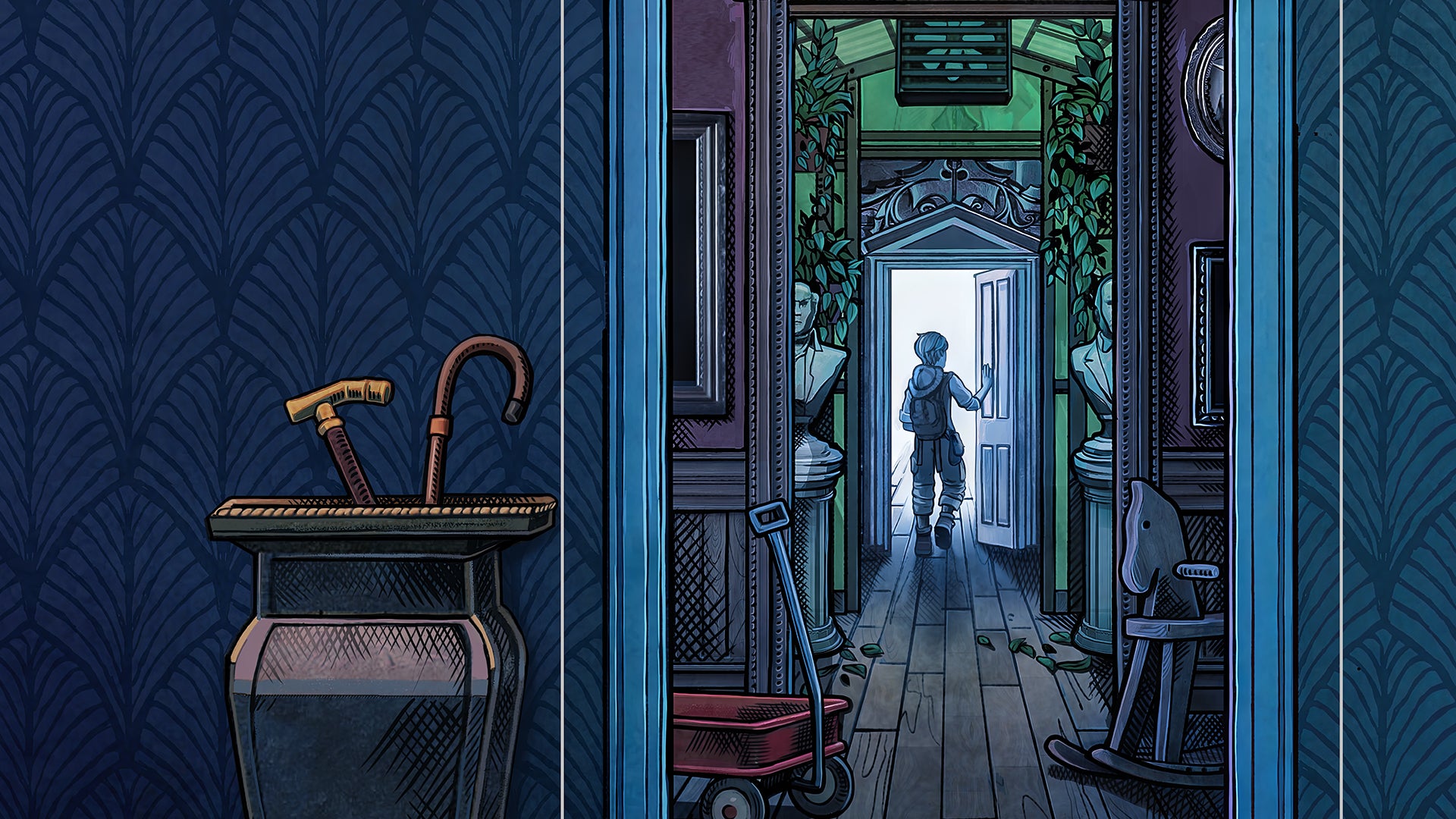
One of us played Blue Prince for 16 hours straight and beat it in a single session. Another spent nearly 40 in-game days and still hasn't reached the end. A third gave up after the random number generator kept blocking every promising run. Same game, wildly different experiences. That gap tells you something important about puzzle roguelike design, and we spent an evening picking apart exactly what.
The Game
Blue Prince is a puzzle roguelike by Dogubomb (published by Raw Fury) where you explore a mysterious mansion that reshuffles every day. Each run, you're dealt random room cards and choose which to place on your floor plan, building the layout as you go. Solve puzzles, collect items, and try to reach the legendary Room 46 before running out of steps. Fail, and the mansion resets. Your knowledge doesn't. It launched in April 2025 to "Very Positive" reviews on Steam (12,000+), took eight years to develop, and clocks in at roughly 18 hours for the main story or 100 for completionists.
A Concept That Earns Its Complexity
What Blue Prince does: Instead of fighting enemies or optimizing builds like most roguelikes, you're placing rooms on a blueprint, solving environmental puzzles, and managing a limited step count. Each room has its own secrets, interactions, and visual personality.
Why it's interesting: Our group unanimously agreed this is one of the most creative genre mashups we've seen. The loop of entering a new room and figuring out how it connects to the larger puzzle web is deeply satisfying. One member even adapted the room-drafting mechanic into a D&D dungeon for their tabletop group, which tells you how sticky the core idea is.
Our take: Blue Prince proves that a genuinely novel core loop carries a game through significant friction. Before polishing systems, ask whether your core mechanic is interesting enough that someone would explain it to a friend unprompted. That's the bar Blue Prince clears.
When Randomness Undermines Your Own Progression
What Blue Prince does: As you explore, you can unlock new rooms and permanently add them to your drafting pool. On future runs, these rooms are mixed into the random hands you're dealt. If the specific rooms you need don't show up in a given run, there's no alternative path forward.
Why it's interesting: Several of us actively avoided adding new rooms to the pool. Every addition dilutes it, reducing your chances of being dealt the specific rooms you need. Unlike a deck builder like Slay the Spire, you can't trim. One member found a room they were excited to try but deliberately skipped adding it, knowing it would hurt their odds on future runs. The "reward" for exploration was making the game harder. This compounds into what we'd call a missing skill floor. In Hades, people complete runs without upgrades. In Slay the Spire, a weak deck in expert hands still wins. In Blue Prince's mid-game, if the rooms don't come, there's nothing you can do. One member put it plainly: "I know the puzzle solution. I just need this room to show up so I can press a button. So I'm rolling the dice until it happens."
Our take: We started calling this reward-as-dilution, where collecting a reward actively degrades your ability to execute a strategy. We wondered what it would feel like if players could pin rooms so they appear more often, or shelve unlocked rooms temporarily. It raised a useful design question for our own projects. When the RNG gives your player nothing they want, can they still make a meaningful decision, or are they just waiting?
When Your Player's Phone Becomes the Game's Memory
What Blue Prince does: The mansion is dense with interconnected puzzles, lore documents, and item combinations. Solving deeper mysteries requires cross-referencing clues across dozens of rooms and runs. None of it is tracked in-game.
Why it's interesting: Our phones were full of screenshots. One member's camera roll looked like a conspiracy board. The real cost hits when you step away: put the game down for a week and all that accumulated knowledge is gone. Multiple members said re-entry friction nearly made them quit, not because the game stopped being fun, but because rebuilding the mental model felt like unpaid homework.
Our take: This got us thinking. If your game requires knowledge retention across sessions, should the memory system live inside the game itself? We tossed around ideas like a notebook modeled on Outer Wilds' ship log, or what we jokingly called "normal life mode", a toggle flagging whether a piece of in-game text contains a puzzle hint so players without 100 hours don't have to read every multi-page letter hunting for one critical clue. Whether those specific ideas would work for Blue Prince is hard to say, but the underlying question feels worth asking early in development. Are we designing for someone who plays every day, or someone who comes back after a week?
The Verdict: Worth Studying
Blue Prince is genuinely innovative. The core concept is one of the freshest in the roguelike space, the art is beautiful, and the puzzle design at its best delivers real "a-ha" moments. The genre mashup alone is worth experiencing as a developer and the friction points are instructive case studies.
We rate games on how much they teach you about game design, not how much fun they are on a Friday night.
Must Study — packed with design lessons every game dev should see firsthand
Worth Studying — meaningful takeaways that reward close attention
Skim It — a few interesting ideas, but you can learn them secondhand
Pass — not much to learn here

RealXP Lab
Share